

ในสายการผลิตทางอุตสาหกรรม ลูกกลิ้งอุตสาหกรรมอาจไม่ใช่เครื่องมือที่เด่นชัดที่สุด แต่บ่อยครั้งที่มันเป็นส่วนประกอบที่สำคัญยิ่งที่กำหนดเสถียรภาพของสายการผลิตทั้งหมด ไม่ว่าจะเป็นในอุตสาหกรรมฟิล์ม พลาสติก การพิมพ์ การผลิตกระดาษ สิ่งทอ เหล็ก การแปรรูปอะลูมิเนียม การเคลือบ การลามิเนต ยาง งานไม้ หรือบรรจุภัณฑ์ ลูกกลิ้งอุตสาหกรรมทำหน้าที่สำคัญต่างๆ เช่น การลำเลียง การดึง การกด การเคลือบ การระบายความร้อน การให้ความร้อน การนำทาง การปรับระดับ และการปรับสภาพพื้นผิว เพื่อให้ลูกกลิ้งสามารถทนต่อความเร็วสูง ความดันสูง อุณหภูมิสูง การกัดกร่อน การสึกหรอจากการเสียดสี และสภาพแวดล้อมทางเคมีที่ซับซ้อน โดยทั่วไปแล้วโรงงานต่างๆ จะเคลือบพื้นผิวลูกกลิ้งด้วยชั้นต่างๆ เช่น การเคลือบด้วยทังสเตนคาร์ไบด์ การชุบโครมแข็ง ชั้นยาง ชั้นเซรามิก หรือชั้นโลหะผสมนิกเกล
อย่างไรก็ตาม ปัญหาใหญ่สำหรับผู้ผลิตหลายรายไม่ได้อยู่ที่การมีสารเคลือบเพียงอย่างเดียว แต่เป็นสาเหตุที่ทำให้สารเคลือบนั้นเกิดความเสียหายหรือหลุดลอกออกอย่างกะทันหัน หากลูกกลิ้งที่เพิ่งซ่อมแซมหรือเคลือบใหม่แสดงอาการลอกเป็นแผ่น แตก ร้าว เป็นฟอง หรือหลุดล่อนหลังจากใช้งานเพียงไม่กี่วันหรือสัปดาห์ ความเสียหายที่เกิดขึ้นจะมากกว่าแค่ค่าใช้จ่ายในการขัดผิวลูกกลิ้งใหม่ ความเสียหายของสารเคลือบอาจทำให้เส้นผ่านศูนย์กลางและความหยาบของพื้นผิวลูกกลิ้งเปลี่ยนแปลงไป นำไปสู่ข้อบกพร่องของผลิตภัณฑ์ เช่น รอยด่าง ความหนาไม่สม่ำเสมอ ความตึงไม่คงที่ ข้อบกพร่องในการพิมพ์ หรือคุณภาพการเคลือบที่ไม่ดี นอกจากนี้ หากเศษชิ้นส่วนที่หลุดออกมาเข้าไปในบริเวณที่หมุนด้วยความเร็วสูง อาจทำให้เกิดความเสียหายต่ออุปกรณ์ที่อยู่ใกล้เคียง ทำให้ผลิตภัณฑ์เป็นรอย หรือแม้กระทั่งทำให้สายการผลิตหยุดชะงักทั้งหมด
เพื่อทำให้เรื่องซับซ้อนยิ่งขึ้น กลไกที่อยู่เบื้องหลังความล้มเหลวของสารเคลือบจะแตกต่างกันไปตามประเภทของลูกกลิ้ง สำหรับลูกกลิ้งที่เคลือบด้วยทังสเตนคาร์ไบด์ ปัญหาต่างๆ มักเกิดจากการยึดเกาะระหว่างพื้นผิว ความเครียดตกค้าง รูพรุน พารามิเตอร์การพ่น และการเตรียมพื้นผิวก่อนกระบวนการ HVOF (High-Velocity Oxy-Fuel) ลูกกลิ้งชุบโครเมียมเกี่ยวข้องกับปัจจัยต่างๆ เช่น การเตรียมพื้นผิว ความหนาแน่นของกระแสไฟฟ้า ความเครียดภายในของสารเคลือบ การแตกร้าวขนาดเล็ก การกัดกร่อน และวัฏจักรความร้อน ในขณะเดียวกัน ลูกกลิ้งยางมีความอ่อนไหวต่อปัญหาเกี่ยวกับการยึดเกาะระหว่างยางกับแกนโลหะ การวัลคาไนซ์ ความทนทานต่ออุณหภูมิ ความทนทานต่อสารเคมี และความล้าทางกล ดังนั้น การกล่าวโทษว่าความล้มเหลวของสารเคลือบทุกกรณีเกิดจากคุณภาพการใช้งานที่ไม่ดี มักจะไม่สามารถแก้ไขสาเหตุที่แท้จริงของปัญหาได้
จากมุมมองของการวิเคราะห์ความล้มเหลว การหลุดลอกของสารเคลือบลูกกลิ้งอุตสาหกรรมโดยทั่วไปเป็นปัญหาเชิงระบบที่อาจเกี่ยวข้องกับวัสดุพื้นผิว การเตรียมพื้นผิว วัสดุเคลือบ พารามิเตอร์การใช้งาน การบำบัดหลังการเคลือบ สภาพการใช้งาน และแนวทางการบำรุงรักษา บทความนี้วิเคราะห์สาเหตุของการหลุดลอกในลูกกลิ้งเคลือบทังสเตนคาร์ไบด์และลูกกลิ้งชุบโครเมียมเป็นรวมถึงลูกกลิ้งหุ้มยางตามสภาพแวดล้อมการใช้งานจริง และยังกล่าวถึงกลยุทธ์ในการลดความเสี่ยงของการหลุดลอกของสารเคลือบผ่านการออกแบบ การผลิต การตรวจสอบ และการบำรุงรักษา
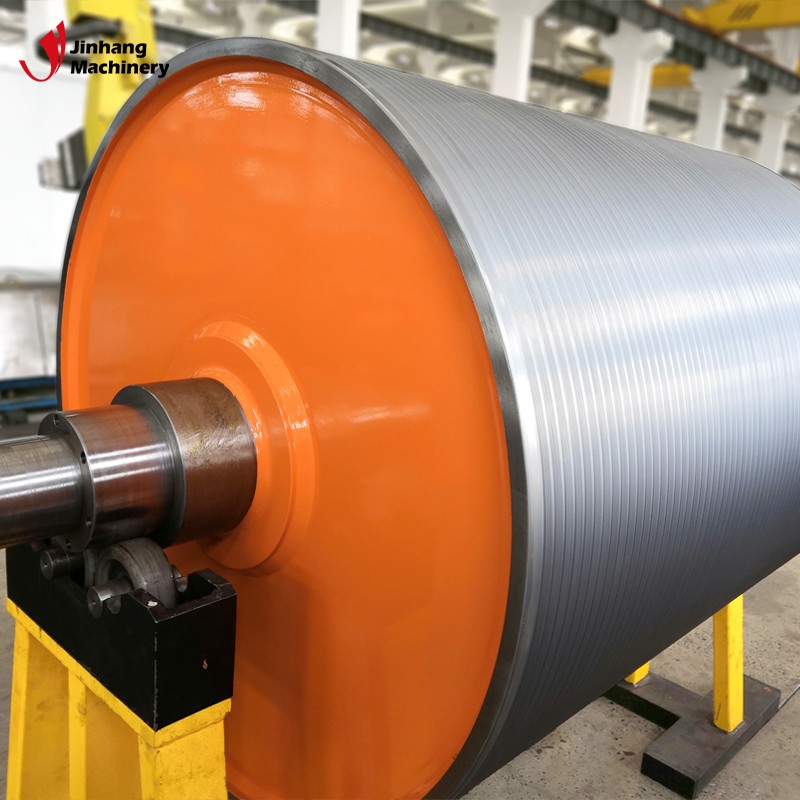
เหตุใดสารเคลือบลูกกลิ้งอุตสาหกรรมจึงหลุดลอก?
โดยทั่วไปแล้วชั้นใช้งานบนพื้นผิวของลูกกลิ้งอุตสาหกรรมมีความหนาเพียงไม่กี่สิบถึงหลายร้อยไมครอน สำหรับลูกกลิ้งที่พ่นด้วยความร้อนบางชนิด ชั้นใช้งานสุดท้าย—หลังจากพ่น ขัด และขัดเงา—มักมีความหนาอยู่ในช่วง 0.15–0.40 มม. ในขณะที่ความหนาจริงของชั้นโครมแข็งจะแตกต่างกันอย่างมาก ขึ้นอยู่กับการใช้งาน ค่าเผื่อการซ่อมแซม และข้อกำหนดของกระบวนการ ในส่วนของสารเคลือบที่พ่นด้วยความร้อน เอกสารทางเทคนิคระบุว่าสารเคลือบคาร์ไบด์ (เช่น WC-Co) สามารถให้ความแข็งได้ประมาณ 1000–1500 HV โดยมีความหนาโดยทั่วไปอยู่ในช่วง 50 ถึง 500 ไมครอน
อย่างไรก็ตาม ลูกกลิ้งอุตสาหกรรมต้องเผชิญกับภาระไดนามิกที่ซับซ้อน ในระหว่างการหมุนด้วยความเร็วสูง สารเคลือบต้องทนต่อแรงเสียดทาน แรงกดสัมผัส แรงกระแทก การสั่นสะเทือน การเปลี่ยนแปลงอุณหภูมิ และการสัมผัสกับสารเคมี หากมีปัญหา เช่น การปนเปื้อนของน้ำมัน ออกไซด์ สารเคลือบเก่าที่ตกค้าง รูพรุนบนพื้นผิว หรือความแข็งแรงในการยึดเกาะไม่เพียงพอที่บริเวณรอยต่อระหว่างสารเคลือบกับพื้นผิวโลหะ สารเคลือบอาจดูแข็งแรงบนพื้นผิวในขณะที่ค่อยๆ เสื่อมสภาพลงที่บริเวณรอยต่อ
โดยเฉพาะอย่างยิ่งในกรณีของการเคลือบผิวด้วยการพ่นความร้อน การเคลือบทังสเตนคาร์ไบด์ที่เกิดขึ้นจากกระบวนการ HVOF (High-Velocity Oxy-Fuel) จะไม่หลอมรวมกับพื้นผิวเหมือนแผ่นโลหะแข็ง แต่จะถูกสร้างขึ้นผ่านการกระแทก การเสียรูป การแพร่กระจาย และการตกตะกอนของอนุภาคทีละชั้นด้วยความเร็วสูง ส่งผลให้เกิดโครงสร้างจุลภาคที่ซับซ้อน ดังนั้น การยึดเกาะระหว่างพื้นผิวและการเคลือบ ความแข็งแรงของเนื้อวัสดุภายในการเคลือบ และสภาวะของความเค้นตกค้าง ล้วนส่งผลต่ออายุการใช้งานของลูกกลิ้ง งานวิจัยชี้ให้เห็นว่าความสมบูรณ์ของโครงสร้างของการเคลือบคาร์ไบด์ที่พ่นด้วยความร้อนนั้นขึ้นอยู่กับไม่เพียงแต่การเคลือบเองเท่านั้น แต่ยังขึ้นอยู่กับความสามารถในการถ่ายโอนแรงและสถานะการยึดเกาะที่ส่วนต่อประสานระหว่างการเคลือบและพื้นผิวอย่างมาก สภาวะของความเค้นตกค้างยังส่งผลกระทบอย่างมากต่อคุณสมบัติทางกลของการเคลือบด้วย ดังนั้น การหลุดลอกของการเคลือบลูกกลิ้งอุตสาหกรรมมักจะเริ่มต้นไม่ใช่ที่จุดที่แข็งที่สุด แต่เริ่มต้นที่ส่วนต่อประสานที่อ่อนแอที่สุด
สาเหตุหลัก: การเตรียมพื้นผิวของลูกกลิ้งอุตสาหกรรมไม่เหมาะสม
ในหลายกรณีของความล้มเหลวในการเคลือบผิวด้วยลูกกลิ้งในอุตสาหกรรม การเตรียมพื้นผิวก่อนการเคลือบผิวถือเป็นจุดสำคัญที่ต้องได้รับการตรวจสอบอย่างละเอียด ไม่ว่าจะเป็นการเคลือบผิวด้วยวัสดุใดก็ตามลูกกลิ้งเคลือบทังสเตนคาร์ไบด์ม้วนชุบโครเมียมเป็นหรือลูกกลิ้งยางเป็นดังนั้น คุณภาพของรอยต่อระหว่างสารเคลือบกับพื้นผิวจึงเป็นตัวกำหนดความน่าเชื่อถือของการยึดติดขั้นสุดท้ายโดยตรง
ยกตัวอย่างเช่น ลูกกลิ้งเคลือบด้วยทังสเตนคาร์ไบด์ โดยทั่วไปแล้วพื้นผิวลูกกลิ้งจะต้องผ่านการล้างคราบไขมัน การทำความสะอาด การพ่นทราย หรือการปรับพื้นผิวให้หยาบด้วยวิธีอื่นๆ ก่อนการพ่นเคลือบ HVOF หากยังมีน้ำมัน น้ำมันหล่อลื่น ฝุ่นละออง ชั้นออกไซด์ หรือความชื้นหลงเหลืออยู่บนพื้นผิวของวัสดุ การสร้างพันธะยึดเกาะระหว่างพื้นผิวที่มั่นคงจะทำได้ยาก แม้ว่าจะตั้งค่าพารามิเตอร์การพ่นเคลือบอย่างสมบูรณ์แล้วก็ตาม
ข้อมูลทางเทคนิคจาก TWI เกี่ยวกับการหลุดลอกของสารเคลือบด้วยการพ่นความร้อนระบุไว้อย่างชัดเจนว่า การไม่ขจัดคราบไขมันและพ่นทรายพื้นผิวอย่างเพียงพอก่อนการพ่นอาจนำไปสู่การหลุดลอกเนื่องจากสิ่งปนเปื้อนบนพื้นผิวหรือความหยาบของพื้นผิวที่ไม่เหมาะสม ปัจจัยต่างๆ เช่น วัสดุที่ใช้ในการพ่นทราย พารามิเตอร์การพ่นทราย ระยะการพ่น อุณหภูมิของพื้นผิว และสถานะการสอบเทียบอุปกรณ์ ล้วนต้องได้รับการควบคุมอย่างเข้มงวด
ลูกกลิ้งอุตสาหกรรมมีความเสี่ยงต่อปัญหานี้เป็นพิเศษ เนื่องจากหลายโครงการเกี่ยวข้องกับการปรับปรุงลูกกลิ้งที่ใช้แล้ว พื้นผิวของลูกกลิ้งอุตสาหกรรมที่ใช้แล้วอาจมีชั้นสึกหรอ คราบกาว สารเคลือบเก่า ผลิตภัณฑ์จากการกัดกร่อน และสิ่งปนเปื้อนจากน้ำมันสะสม การกลึงอย่างง่ายแล้วพ่นสีทันทีไม่ได้รับประกันว่าพื้นผิวจะอยู่ในสภาพที่ยอมรับได้ หากมีชั้นสิ่งปนเปื้อนที่มองไม่เห็นหลงเหลืออยู่บนพื้นผิว อาจส่งผลให้เกิดความเสียหายแบบคลาสสิก คือ สารเคลือบดูเหมือนจะเคลือบได้ดี แต่ต่อมาจะหลุดลอกเป็นแผ่นใหญ่ระหว่างการใช้งาน
ดังนั้น เมื่อทำการเคลือบลูกกลิ้งอุตสาหกรรมใหม่ จึงไม่สามารถมุ่งเน้นเฉพาะอุปกรณ์พ่นสีเพียงอย่างเดียวได้ แต่ต้องสร้างกระบวนการที่ครอบคลุมตั้งแต่การลอกสีเก่า การตรวจสอบพื้นผิว การขจัดคราบไขมัน การขัดผิวให้หยาบ และการกำจัดฝุ่น ก่อนที่จะเริ่มการพ่นสีจริง
สาเหตุสำคัญประการที่สอง: ความหยาบและลักษณะพื้นผิวของการพ่นทรายที่ไม่เหมาะสม
สำหรับงานเคลือบผิวลูกกลิ้งในอุตสาหกรรม พื้นผิวที่เรียบกว่าไม่ได้หมายความว่าจะมีการยึดเกาะที่ดีกว่าเสมอไป ในกระบวนการพ่นเคลือบด้วยความร้อนหลายๆ กระบวนการ พื้นผิวต้องได้รับการทำให้หยาบอย่างเหมาะสมเพื่อสร้างลักษณะพื้นผิวที่ช่วยให้เกิดการยึดเกาะทางกลและการยึดติดระหว่างพื้นผิว สำหรับลูกกลิ้งเคลือบทังสเตนคาร์ไบด์ที่พ่นด้วย HVOF ลักษณะพื้นผิวหลังการพ่นทราย—ซึ่งมักระบุไว้ในเอกสารกระบวนการทางอุตสาหกรรมว่าอยู่ในช่วงหลายสิบไมครอน (เช่น ความสูงของลักษณะพื้นผิวประมาณ 30–80 ไมครอน)—จะแตกต่างกันไปขึ้นอยู่กับพื้นผิว สื่อขัดถู ระบบการเคลือบ และกระบวนการพ่น ดังนั้นจึงไม่มีมาตรฐานสากลเดียวที่ใช้ได้กับลูกกลิ้งอุตสาหกรรมทั้งหมด
Insufficient surface roughening fails to provide the necessary conditions for mechanical interlocking, whereas excessive roughening can create sharp peaks and valleys, lead to localized stress concentrations, or damage the substrate surface. More importantly, there is an often-overlooked issue following sandblasting: residual dust.
Case studies on the failure of WC-Co coated industrial rollers indicate that residual sandblasting particles and subsequent atmospheric corrosion can contribute to coating delamination. Researchers have observed WC-Co coating delamination on failed industrial rollers and analyzed how residual particles and atmospheric corrosion influence coating failure.
Therefore, simply completing the sandblasting process does not equate to a satisfactory surface treatment. What truly matters is the cleanliness of the surface after sandblasting, the suitability of the roughness, the timely transition to the spraying stage, and whether the surface suffers from secondary contamination.
Third major cause: Mismatched spraying parameters leading to abnormal internal structure in the tungsten carbide coating
For tungsten carbide coated rolls, HVOF spraying parameters are critical determinants of coating quality. There are complex, coupled relationships among factors such as fuel type, oxygen supply, spray distance, powder particle size, powder feed rate, gun speed, workpiece rotation speed, spray gun traverse speed, and substrate temperature.
A key advantage of HVOF is the use of a high-speed combustion gas stream to accelerate powders—such as WC-Co or WC-CoCr—to high velocities, causing the particles to impact the substrate and form a dense coating. In industrial applications, particle velocities can reach hundreds of meters per second; typical ranges cited in process literature are approximately 600–900 m/s.
However, the notion that "higher energy is always better" is a misconception. Excessive spraying temperatures, particle overheating, or prolonged residence times can trigger decarburization and dissolution of the WC phase, as well as the formation of brittle phases such as W₂C. Relevant studies indicate that decarburization can still occur in WC-Co systems applied via HVOF spraying, particularly due to localized overheating of the powder within the high-temperature flame and the dissolution of WC.
Changes in the coating's microstructure can alter its hardness, toughness, wear resistance, and residual stress state. For industrial rollers, such changes may not be immediately visible to the naked eye after spraying; however, following continuous rotation, friction, and thermal cycling, cracks may gradually form in weaker zones, eventually leading to localized spalling.
Therefore, the key to managing tungsten carbide coated rolls lies in controlling the spraying parameters (the "spraying window") rather than simply pursuing higher flame temperatures, higher velocities, or greater coating thicknesses.
Reason No. 4: Excessive coating thickness increases the risk of delamination on industrial rollers
This is an issue often overlooked by procurement personnel.
Many assume that a thicker tungsten carbide coating equates to superior wear resistance for industrial rollers. However, increasing the coating thickness can also lead to an accumulation of residual stress, thermal stress, and internal defects. Research into thermal spraying has shown that residual stress is linked to both coating thickness and substrate geometry, and that it influences the coating's fatigue life and failure behavior.
For instance, consider an industrial roller that requires a final working layer of only 200–300 μm. If it is sprayed to a thickness of 600–800 μm in a single pass—ostensibly to extend its "wear life"—and then ground down to meet dimensional specifications, this design approach is not necessarily optimal. Factors such as internal heat accumulation, interlaminar stress, and shrinkage during cooling become more pronounced.
For HVOF-sprayed tungsten carbide rolls, the actual thickness should be determined based on the wear allowance, final machining allowance, substrate repair requirements, and specific operating conditions. While recent technical literature on industrial roller thermal spraying often cites a typical thickness range of 150–400 μm, this serves only as a reference for specific applications and cannot replace a tailored design.
In short, a thicker coating does not automatically mean a more durable industrial roller; the goal should be to maintain an appropriate thickness while meeting the required wear life.
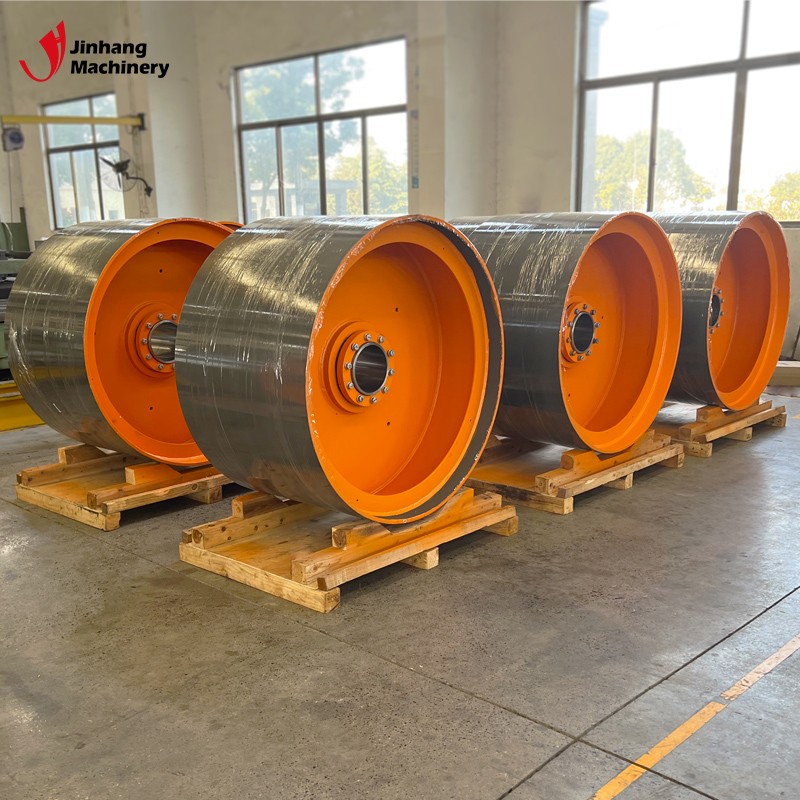
Reason No. 5: Excessive Residual Stress in the Coating
Residual stress is a highly technical yet critical factor in the delamination of industrial roller coatings.
During the HVOF (High-Velocity Oxy-Fuel) spraying process used for tungsten carbide (WC) coated rolls, powder particles undergo rapid heating, acceleration, impact, and cooling as the coating gradually forms. However, the thermal expansion behavior of the industrial roller substrate does not perfectly match that of the WC-Co or WC-CoCr coating. Consequently, residual stresses can develop between the coating and the substrate after spraying and cooling.
Residual stress is not necessarily detrimental; studies indicate that appropriate compressive residual stress can actually enhance the mechanical properties of thermally sprayed carbide coatings. However, if the residual stress state is poorly controlled, it can compromise interfacial stability and increase the risk of cracking and delamination.
Factors such as the roll's diameter, length, and wall thickness also influence heat transfer and cooling rates. During the spraying of large industrial rollers, if the temperature rises rapidly in one area of the roll surface while remaining low in others, significant thermal gradients can arise. These thermal gradients translate into thermal stresses; without proper control, this can lead to coating cracks, warping, or localized delamination.
Therefore, the spraying process for industrial rollers requires control not only of "spray gun parameters" but also of the roll body temperature and thermal cycling.
Reason No. 6: Thermal Expansion Mismatch Between Substrate and Tungsten Carbide Coating
Industrial rollers typically utilize steel, alloy steel, stainless steel, or other metals as substrates, whereas WC-based hard coatings exhibit different thermal expansion characteristics compared to steel substrates. When industrial rollers operate for extended periods at temperatures of 100°C, 200°C, or higher, both the substrate and the coating undergo thermal expansion; conversely, they contract when the equipment is shut down and allowed to cool.
Disparities in thermal expansion between the two materials generate interfacial stress. If a production line undergoes multiple heating-cooling cycles daily, the industrial roller coating is effectively subjected to continuous "thermal fatigue."
This consideration is equally important for chrome-plated rollers. Hard chrome itself is a high-hardness, relatively brittle surface layer; publicly available data typically cites hardness values in the range of approximately 60–70 HRC or 800–1000 HV. In industrial environments characterized by frequent temperature fluctuations, the difference in thermal expansion between the substrate and the chromium layer can cause micro-cracks to propagate continuously, eventually leading to spalling.
Therefore, when selecting coating materials for industrial rollers—such as heating, cooling, or hot-pressing rolls, as well as those subject to frequent thermal cycling—the actual temperature cycling conditions must be taken into account.
Reason No. 7: Excessive or uneven mechanical loading on industrial rollers
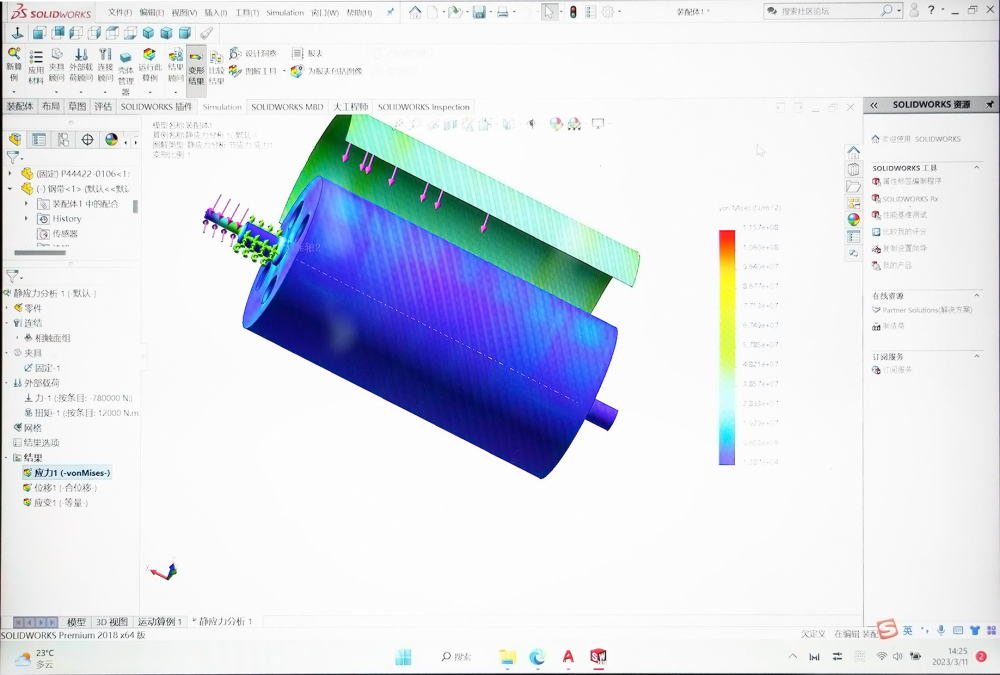
An industrial roller coating is not a load-bearing structure in isolation; it bears the production line loads in conjunction with the roll body itself.
For instance, calendering rolls may be subjected to high linear pressure; laminating rolls undergo continuous compression; guide rolls bear material tension; high-speed printing rolls experience cyclic contact; and rolls in the steel industry may face severe impact and thermo-mechanical loads.
Issues such as non-parallel roll axes, excessive roll deflection, abnormal bearing conditions, or uneven pressure across the roll face can cause localized areas of the coating to experience excessive contact stress. While a coating might withstand uniform loads under normal conditions, it is prone to cracking when subjected to localized stress concentrations.
This is a particular concern for chrome-plated rollers. Although hard chrome layers possess high hardness, this does not equate to high toughness. Technical literature on industrial chrome-plated rollers indicates that mechanical pressure, vibration, impact, and friction can induce micro-cracks in the hard chrome layer; these cracks then propagate, eventually leading to spalling.
Consequently, when localized coating detachment is observed on an industrial roller, one must not limit the inspection to the coating itself; it is also necessary to examine the bearings, couplings, parallelism, roll deflection, linear pressure, and the equipment's installation status.
Reason No. 8: Surface scratches leading to coating failure originating from localized defects
Once the surface coating of an industrial roller is scratched, that scratch can serve as the starting point for subsequent delamination.
For example, chrome-plated rollers used on printing or coating lines often employ doctor blades; if the blade pressure is excessive, hard foreign particles are present on the blade edge, or metal particles contaminate the ink, scratches may appear on the roll surface. While initial scratches might only affect surface roughness, the continuous rotation of the roll creates a zone of stress concentration at the base of the scratch, which can eventually propagate to the surrounding area.
A similar phenomenon can occur with tungsten carbide-coated rollers. Although tungsten carbide (WC) coatings possess extremely high hardness, localized defects can still form due to the presence of hard particles, abnormal impacts, or the use of improper cleaning tools.
Consequently, maintaining industrial rollers involves more than just "periodic cleaning"; it requires controlling foreign objects that might enter the nip or contact the roll surface. For high-speed industrial rollers, even a tiny metal shard can cause continuous impacts during rotation.
Reason No. 9: Coating failure originating from within due to chemical corrosion
Many industrial production lines utilize solvents, inks, coatings, acidic or alkaline cleaning agents, adhesives, and other chemical media.
Even if an industrial roller coating offers good corrosion resistance, this does not mean it is immune to attack by *all* chemicals. If corrosive media penetrate the coating via micropores, micro-cracks, or localized defects and reach the substrate, corrosion can develop beneath the coating.
Initially, only a few small spots may be visible on the roll surface; however, as corrosion progresses, the interface between the substrate and the coating loses stability, eventually leading to large-scale peeling.
This mechanism is particularly relevant for chrome-plated rollers. While hard chrome layers are corrosion-resistant, their micro-cracked structure can provide pathways for corrosive media to penetrate in certain environments. Technical literature on industrial chrome-plated rollers identifies acidic/alkaline environments, corrosive gases, and prolonged chemical exposure as risk factors for coating failure.
Therefore, when selecting an industrial roller coating, it is essential to provide accurate information regarding the chemical media involved, rather than simply stating that the "environment is relatively mild." For industries such as coating, printing, laminating, and chemical processing, the Safety Data Sheets (SDS) for cleaning agents, solvents, and process media provide valuable reference information.
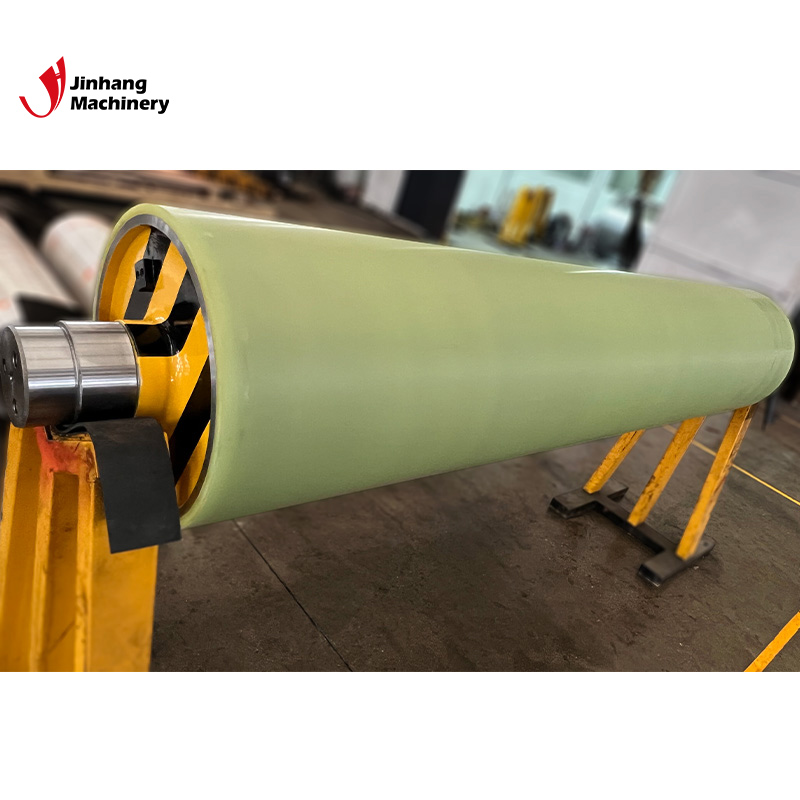
Reason No. 10: Delamination of rubber rollers follows a completely different logic than that of tungsten carbide-coated rollers
When discussing coating detachment on industrial rollers, people often lump rubber rollers into the same "coating detachment" category; however, a more accurate description for rubber rollers is the loss of adhesion, delamination, or peeling between the rubber covering and the metal core.
The structure of a rubber roller typically consists of a metal core, a bonding system, and a rubber covering. The primary difference between these and tungsten carbide-coated rollers lies in the nature of the material: rubber is a polymer exhibiting distinct viscoelastic properties. Its failure is influenced not only by mechanical stress but also by factors such as temperature, solvents, oils, ozone, humidity, the state of vulcanization, and the material formulation.
One of the most common causes of delamination in rubber rollers is inadequate surface preparation of the metal core. If the core retains oil, rust, residual old rubber, dust, or other contaminants, the adhesive cannot form a reliable bond; this can ultimately lead to edge lifting, localized blistering, or complete delamination. Technical literature on rubber-to-metal bonding identifies degreasing, sandblasting, primer application, the adhesive system, and the vulcanization process as critical factors determining bond reliability.
Consequently, solutions applicable to tungsten carbide-coated rollers cannot be directly applied to address coating detachment on rubber rollers.
Reason No. 11: Improper grinding after industrial roller coating
Many enterprises focus exclusively on the "coating" stage while neglecting the final grinding process.
In reality, tungsten carbide-coated rollers typically require precision grinding and polishing after HVOF spraying to meet final dimensional and surface roughness specifications. Technical data on the thermal spraying of industrial rollers indicates that precision grinding is essential post-coating to achieve the required final diameter and surface quality.
If the grinding process involves an unsuitable grinding wheel, insufficient cooling, excessive feed rates, or prolonged dwell times in specific areas, it can cause localized thermal damage, micro-cracking, or even edge chipping.
This is particularly critical for tungsten carbide coatings with hardness exceeding 1000 HV; they cannot be processed using standard grinding methods for ordinary steel rollers. Parameters such as the grinding process, wheel grit size, linear speed, feed rate, and cooling method must be tailored to the specific coating system.
Chrome-plated rollers similarly require precision grinding and polishing. Uneven plating thickness or localized overheating during grinding can cause existing micro-cracks to propagate further.
Reason No. 12: Rapid fluctuations in industrial roller operating temperature
When industrial rollers operate in high-temperature environments, the rates of both heating and cooling are critical. For instance, with an industrial heating roll operating at 200°C, rapid heating from room temperature can create a significant temperature gradient between the roll's surface and its interior; conversely, dousing the roll with large amounts of coolant immediately after a production line shutdown can subject it to severe thermal shock.
Such thermal cycling can accelerate micro-crack propagation in chrome-plated rollers, induce thermal stress variations between the coating and the substrate in tungsten carbide-coated rollers, and cause differential thermal expansion between the rubber and the core in rubber rollers.
Therefore, when using industrial rollers, it is essential to consider the "temperature change process" rather than focusing solely on the "maximum operating temperature."
How do you determine the specific type of delamination on an industrial roller?
In actual repair work, the most critical step is not immediately recoating the roll, but rather diagnosing the failure mode first.
If a tungsten carbide-coated roller exhibits large-scale, flake-like spalling—revealing a clean, relatively intact metal substrate in the detached area—then attention should focus on interfacial bonding, grit blasting quality, and substrate contamination. If the detached area shows extensive cracking, factors such as residual stress, thermal cycling, coating thickness, and mechanical loads must be examined. If the surface displays significant porosity, pitting, or signs of corrosion, the focus should shift to coating density and exposure to chemical media.
For chrome-plated rollers, if the surface develops increasingly dense "mud-cracking" (crazing) followed by localized peeling, key factors to consider include internal plating stress, mechanical loads, and thermal cycling. If rust appears beneath the delaminated area, further inspection for micro-cracks in the plating and the penetration of corrosive media is required.
If a rubber roller shows edge lifting, the bonding, edge design, and potential fluid ingress should be investigated. Localized blistering suggests issues with bond integrity, gas entrapment, temperature, or chemical exposure. If the entire rubber layer separates from the core, the bonding system and vulcanization process require analysis.
In short, observing the shape and nature of the detachment is a vital method for analyzing industrial roller failures.
FAQ
FAQ: Why does an industrial roller coating suddenly detach over a large area?
Sudden, large-scale detachment of an industrial roller coating usually indicates a severe failure of the interfacial bond. Common causes include oil or oxide layers on the substrate surface, inadequate grit blasting, abnormal spraying parameters, excessive residual stress, thermal shock, excessive mechanical loads, and the penetration of corrosive media to the interface. For tungsten carbide-coated rollers, HVOF spraying parameters and coating thickness should also be carefully checked.
FAQ: Why do tungsten carbide coatings on rolls delaminate?
Delamination of tungsten carbide coatings can be linked to factors such as substrate cleanliness, grit blasting (surface roughening), spray distance, spray gun speed, workpiece temperature, powder condition, coating thickness, and residual stress. Interfacial bonding strength can be significantly compromised, in particular, if oil or oxides are present on the substrate prior to spraying. Research on thermal spraying also indicates that residual stress within the coating and the difference in thermal expansion between the coating and the substrate can affect the coating's long-term reliability.
FAQ: Why are chrome-plated rollers prone to cracking and subsequent coating detachment?
Hard chrome coatings possess high hardness but are also somewhat brittle. Mechanical loads, vibration, thermal cycling, internal coating stresses, substrate defects, and corrosive media can all cause micro-cracks to propagate. Once cracks penetrate deep into the coating—or even lead to corrosion of the substrate—the result is often localized or extensive peeling.
FAQ: Does surface blistering on a rubber roller indicate delamination?
In many cases, yes. Localized blistering, edge lifting, or abnormal deformation of the rubber roller may indicate a loss of adhesion between the rubber covering and the metal core. Further inspection is required regarding the metal core's surface treatment, the adhesive used, the vulcanization process, operating temperatures, and any oils, solvents, or cleaning agents used on the production line.
FAQ: Can an industrial roller be re-sprayed immediately after the coating has peeled off?
This is generally not recommended. The failed coating must first be completely removed, and the roll's substrate inspected for cracks, corrosion, deformation, or other defects, before surface pre-treatment and coating application are performed again. If underlying issues are not addressed, simply applying a new coating over the old area is highly likely to result in premature delamination.